Rare Earth Development
A sector being built while it operates
Domestic rare earth development is a national priority and Nevada’s geology has put the state near the centre of it. What that means practically is that most of these projects are young: exploration moving into pilot, pilot moving toward production, on timelines that compress when funding or policy shifts.
That progression is what makes the packaging requirement unusual. Nothing else we supply changes its material handling problem by an order of magnitude within a couple of seasons. A project handling sample quantities one year is handling production streams the next, and the material itself may acquire regulatory handling requirements along the way.
Traceability is a specification input
At exploration and pilot scale, the material’s value is in the information it carries. Sample and process material has to stay identifiable through assay and processing, which puts weight on things that barely register elsewhere — a label panel that survives handling, lot control that holds through the chain, and single-trip use.
That last point deserves stating plainly. On material you are reporting results from, residue from a previous fill is a data integrity problem rather than a housekeeping one. What the bag is made of, and what it carried before, become part of the result. It is the same reasoning that makes reuse unacceptable on food-contact packaging, where the resin and the producing facility are documented precisely because a claim you cannot evidence is not a claim.
Where classification enters
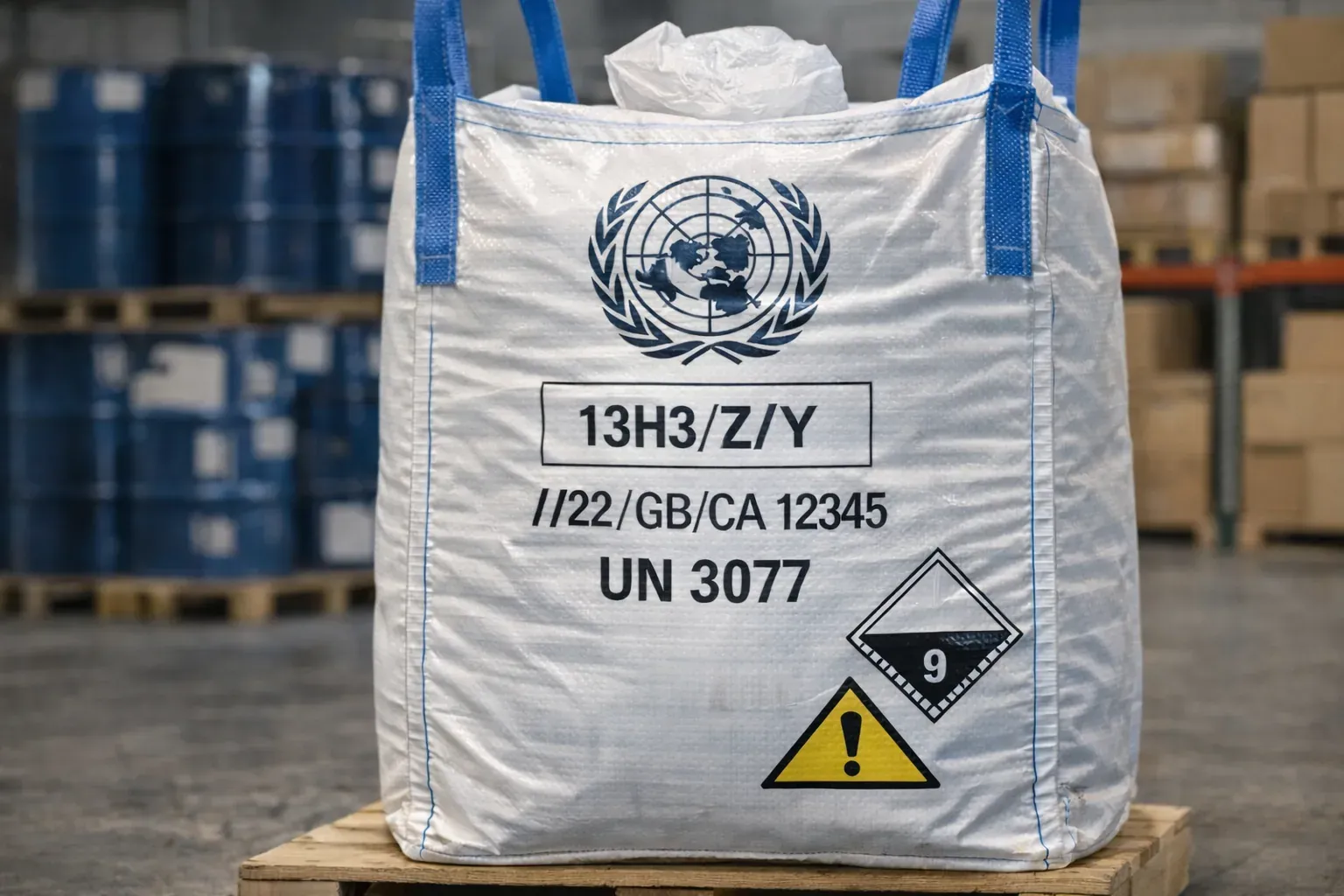
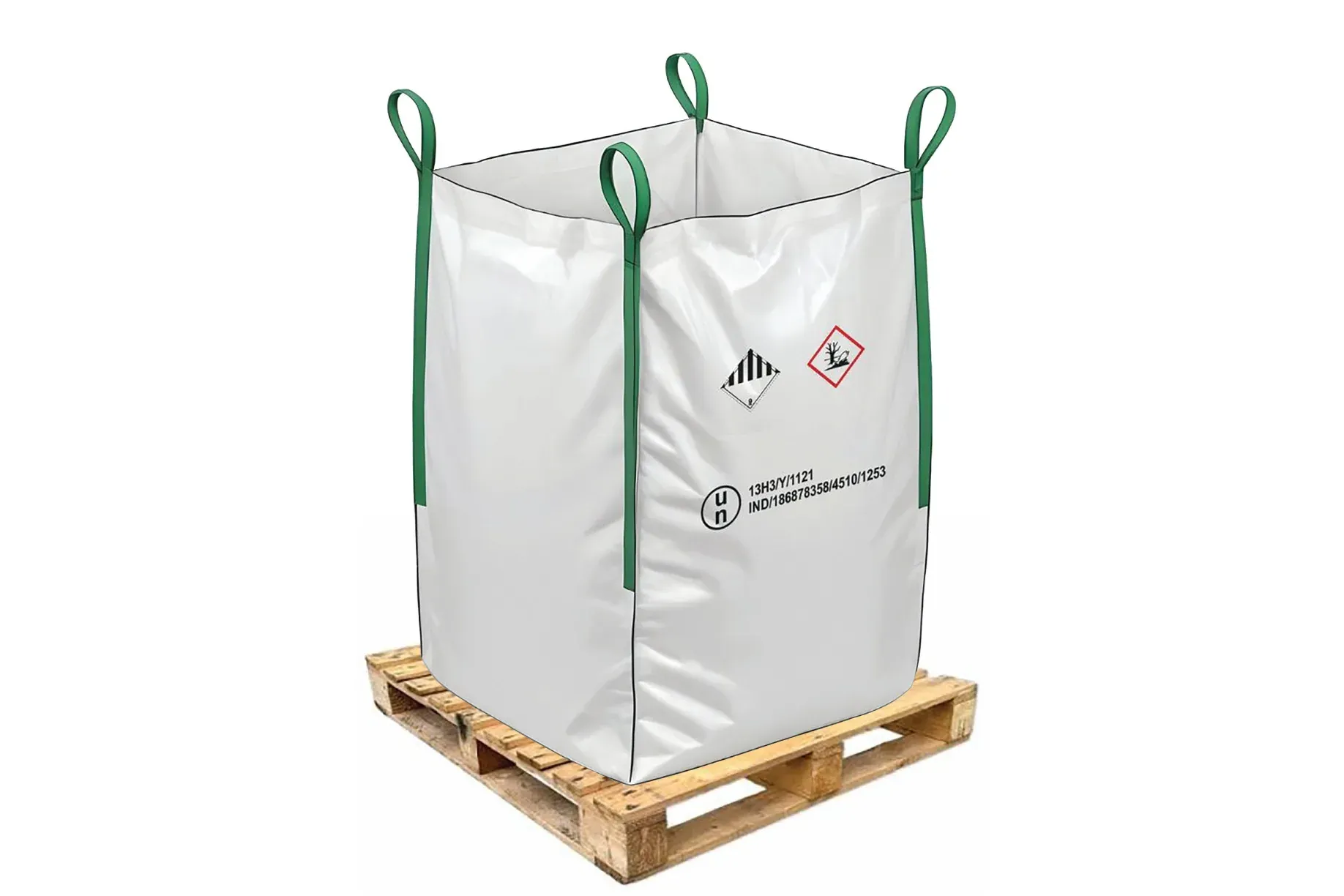
As a project advances, process streams that were unregulated at pilot scale may not stay that way. Once a material ships as dangerous goods it needs a tested and marked package, and that is what UN certification is — qualification by drop, topple, righting and stacking tests at a severity set by the packing group, with a marking an inspector reads.
For material handled on site rather than shipped, the relevant specification is hazmat containment: the liner and the closure doing the containment work, specified against the classification rather than against volume. Both are decided by the UN number, proper shipping name and packing group, which is why we ask for those before anything else.
Ask early, specify once
The single most useful thing a development project can do is raise the packaging question before the volume arrives rather than after. It is a short conversation at pilot scale and an expensive retrofit at production scale.
Rare earth work also sits close to mineral processing as projects mature — the downstream end of one is the upstream end of the other — and the specification questions converge across the sectors we supply more than the sector names suggest.
Getting a number
Send the material, the stage you are at, the volume trajectory you expect, and the classification for anything already regulated. Request a quote with that and we can specify for where you are and flag where it will need to change. If you are earlier than that, talk to us anyway — early is the point.
The constraints that govern this work
Volumes that change fast
A project moving from exploration to pilot to production changes its packaging requirement completely, often within a single season.
Material that may be regulated
Some rare earth ores and process streams carry handling requirements that ordinary aggregate does not.
Traceability of samples
Exploration and pilot material has to stay identifiable through assay and processing, which puts a premium on labelling and lot control.
Remote, early-stage sites
Development projects rarely have established supply lines, so lead time and delivery access matter.
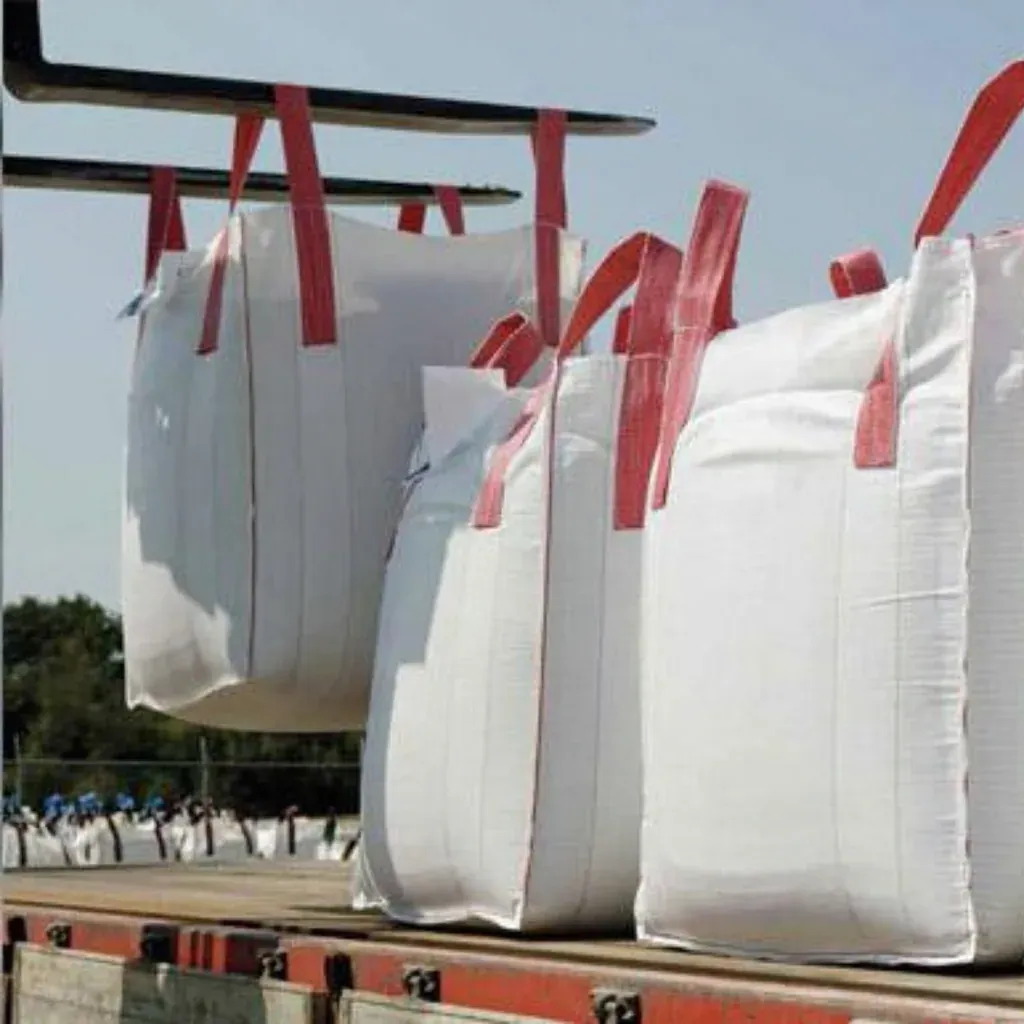
The bags this work needs
Each of these is a specification rather than a product line — the card links to the page that sets out what it is built to survive.
Rare Earth: what buyers ask
We are at exploration scale. Is it too early to talk about packaging?
It is the cheapest time to. Classification, transport mode and lot traceability are straightforward to design in at pilot volumes and awkward to retrofit once production quantities are moving. We would rather have a fifteen-minute conversation now that sets the specification you will grow into than re-solve it under schedule pressure in eighteen months.
How do we keep sample material traceable through assay and processing?
Traceability is mostly a labelling and lot-control discipline rather than a fabric property, but the bag has to support it — a label panel that survives handling, and single-trip use so there is no question about what a bag carried before. That last point matters more here than in most sectors: on material you are reporting results from, residue from a previous fill is a data integrity problem, not just a housekeeping one.
Does rare earth material need UN certified packaging?
Some process streams do. It depends on how the specific material is classified, not on the sector — and the answer can change as a project advances from ore to concentrate to a processed intermediate. That is exactly why raising it early is worth doing: a stream that was unregulated at pilot scale may not be at production.
Our volumes will change by an order of magnitude. Can a specification survive that?
The specification usually can; the supply arrangement has to change with it. Fabric weight, closure and safety factor scale predictably. What does not is quantity, lead time and delivery access — an early-stage site rarely has established supply lines. Tell us the trajectory you expect and we will tell you at which point the arrangement needs revisiting.