Hazmat Bulk Bags
The classification drives everything
There is no general-purpose hazmat bag. What package you are permitted to use is determined by how the material is classified — UN number, proper shipping name, packing group — and by how it is being transported.
So that is the first thing we ask for. Not fill weight, not dimensions. Without the classification, any quote is a guess, and a guess in this area is a compliance problem rather than a commercial one.
Where we draw the line
If your material has to move as dangerous goods, it needs a UN-certified package and we will quote that rather than something that merely looks adequate. If it does not, we will not upsell you into certification you do not need.
The shipper carries responsibility for offering material in a compliant package. We will tell you exactly what the bag we supply is certified for so you can make that call with real information.
Why “hazmat bag” is not a product category
It is worth being blunt about this, because it is the single biggest source of confusion we deal with. There is no fabric, no construction and no certification called “hazmat”. What exists is a set of rules about which packages may be offered for which materials, and those rules key off the material’s classification rather than off anything about the bag.
So two enquiries that both say “I need hazmat bags” can have completely different answers. One material may be handled perfectly well in a lined standard FIBC inside a facility. The next needs a tested, marked package before it can legally leave the site. The bags do not look very different. The compliance position is not remotely the same.
Containment is the liner and the closure
For most regulated material, the woven outer bag is doing structural work and the actual containment is the liner and the closure. That is where specification effort goes: liner material compatible with the product, thickness against the duty, and a closure that can be relied on through handling rather than one that merely looks closed.
Secondary containment is worth raising early too. Your process or your insurer may require it independently of what the transport rules demand, and it is cheaper to design in than to retrofit around bags already ordered.
Where the line runs to UN certification
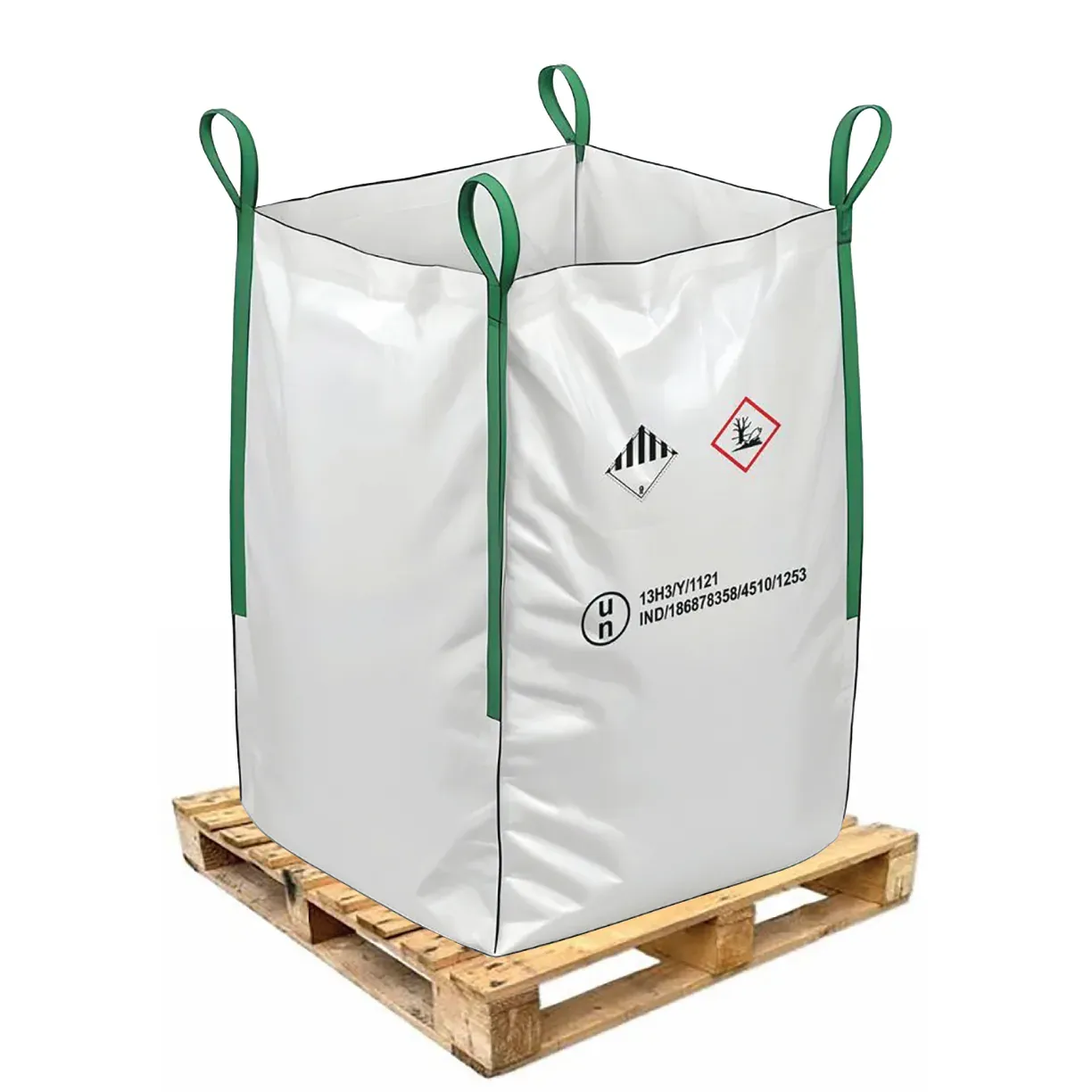
If the material ships as dangerous goods, it needs a tested package and we will quote that rather than something cheaper that looks adequate. UN certified bulk bags are qualified by drop, topple, righting and stacking tests at a severity set by the packing group, and the marking on the bag is what an inspector reads. A bag of identical construction that was never tested is not the same package in a regulatory sense, however similar it looks on a pallet.
If the material stays inside your facility, that testing buys you nothing and we will say so. Where it does apply, the additional question is usually static rather than strength — many regulated powders are combustible as a dust, which puts the anti-static type on the critical path alongside the classification.
The sites this comes up on
Two sectors account for most of it. On mine sites, reagents inbound and concentrate outbound both raise classification questions, and the distance to the nearest supplier means a compliance problem discovered at the gate is an expensive one. In rare earth development, sample and process material carry traceability requirements alongside the regulatory ones, so what the bag is made of and what it carried before become part of the record you are reporting.
Getting a number
Send the UN number, proper shipping name, packing group and transport mode, plus fill weight and how the bag is discharged. Request a quote with that and we can quote a compliant package and state plainly what it is certified for. If you are still establishing the classification, contact us — we can tell you what to have ready, though confirming the classification itself is your compliance team’s call.
Why this spec, for hazmat
Specification starts with the classification
The UN number and packing group determine what package is legal for the material. Everything else — fabric, liner, closure — follows from that, which is why we ask for it first.
Liner and closure matter most
For hazardous material the containment is usually the liner and the closure, not the woven outer. That is where specification effort goes.
Honest about when you need UN certification
Plenty of hazardous material legally requires a UN-certified package. If yours does, we will tell you and quote the certified bag rather than selling you something cheaper that is not compliant.
Documented and traceable
Regulated material means regulated paperwork. Marking and documentation are part of the order, not an afterthought.
From your material to a specification
The same four questions on every quote. They decide fabric weight, seam construction, safety factor and closure — dimensions come last.
Give us the classification
UN number, proper shipping name and packing group. Without these nobody can tell you what package is legal.
Confirm the transport mode
Road, rail, sea or air. Requirements differ, and a package acceptable for one is not automatically acceptable for another.
Specify containment
Liner material, closure type and any secondary containment your process or insurer requires.
Quote with the compliance position stated
The quote says what the bag is certified for. If it is not certified for your material, it says that too.
Hazmat: the questions we get asked
Is a hazmat bag the same as a UN certified bag?
No, and conflating the two causes real problems. UN certification is a specific tested and marked package standard for dangerous goods in transport. A bag can be built for handling a hazardous material in your facility without carrying UN certification. If your material must ship as dangerous goods, you need the certified package — see our UN certified bulk bags.
What do you need from me to quote?
The UN number, proper shipping name and packing group of the material, and how it will be transported. Those determine what is legal. Fill weight, density and discharge method determine the rest.
Can I reuse a hazmat bag?
Generally no. Reuse of packaging that held hazardous material is tightly restricted, and residue makes the package a hazard in itself. Treat these as single-trip unless you have specific authorisation saying otherwise.
Who is responsible for compliance?
The shipper is responsible for offering material in a compliant package. We supply the package and tell you what it is certified for; confirming that it suits your specific material and route is on you and your compliance team. We would rather say that plainly than imply otherwise.